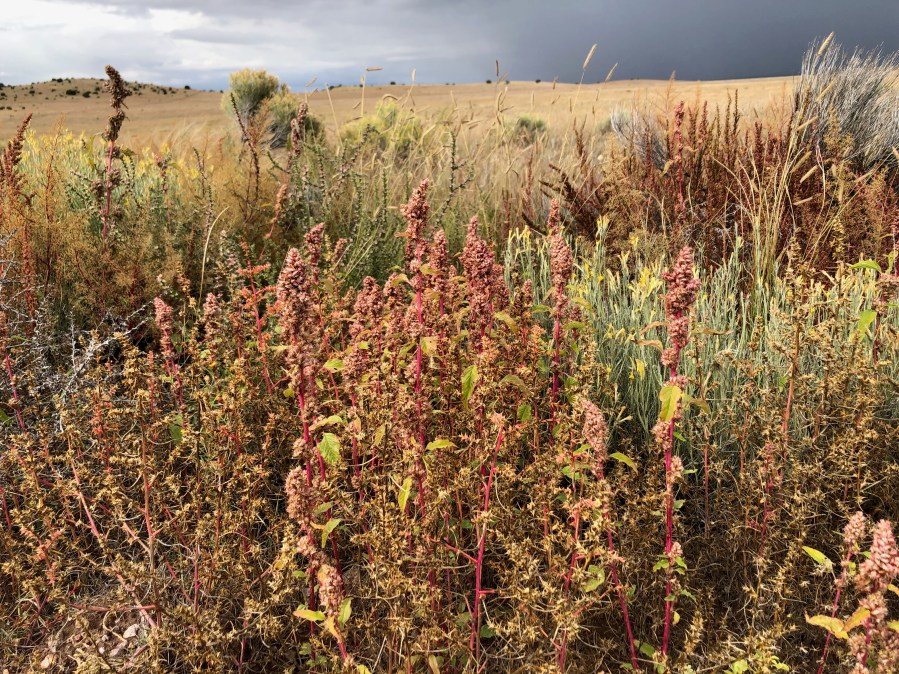
The Southwestern US is home to ~7 non-weedy species of Amaranthus native to the Mojave, Sonoran, and Chihuahuan Deserts. Several of these species are sister taxa to problematic agricultural weeds (including Palmer amaranth, A. palmeri, one of the most troublesome agricultural weeds worldwide), yet their taxonomy, geographic ranges, and ecological tolerances are not well-characterized. The Waselkov Lab is currently undertaking taxonomic studies of these poorly-known Southwestern native species, using herbarium specimens loaned from several institutions and field-collected samples from Dr. Waselkov’s 2022 sabbatical expedition to the Southwest, in some cases germinating seeds in the greenhouse to obtain genetic material and herbarium vouchers. Undergraduate and graduate students in the lab have collected morphological trait data (using dissecting microscopes to observe many of the characters) and genetic data from several nuclear and chloroplast genes to test several hypotheses, including:
- Amaranthus torreyi and A. wrightii are actually the same species (not two different species).
- What has been called Amaranthus torreyi from the Coronado National Forest in Arizona is a new, undescribed species.
- Amaranthus watsonii is not present in the United States, only on the Baja California peninsula in Mexico.
- A Southwestern U.S. native species is the closest relative of the Galapagos native species Amaranthus squamulatus.

