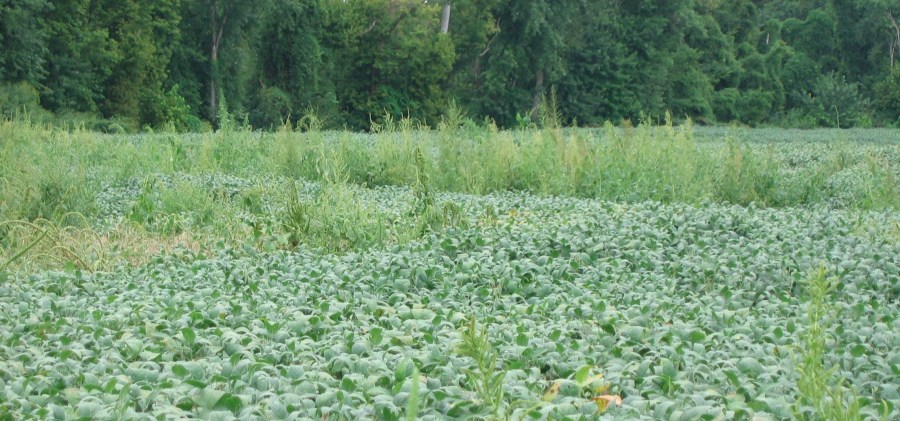
Investigation of the genetic and phenotypic basis of weediness in the genus Amaranthus
The plant genus Amaranthus consists of ~70 species, with species native to every continent except Antarctica. The genus has given rise to ~11 very agriculturally problematic, herbicide-resistant weeds, which according to preliminary phylogenetic studies have evolved convergently in several different clades within the group. This makes Amaranthus the perfect system to study the evolution of “weediness”, or the ability to survive in agricultural environments and compete with crop species. Previous genetic research on Amaranthus weeds, and on weeds in general, has focused mostly on understanding the mutations underlying herbicide resistance or the population genetics of invasions, and a broad genomic and phenomic study of multiple related but independently evolved agricultural weeds has never been undertaken.
With funding from the NSF, we have begun a broad collaborative project led by Dr. Julia Kreiner at the University of Chicago, and also involving the laboratories of Dr. Jeff Maughan at BYU and Dr. Patrick Tranel at the University of Illinois, focused on exploring the evolution of agricultural invasiveness in the genus as a whole. This involves constructing a pangenome of ~40 Amaranthus species, reconstructing a nearly completely-sampled generic phylogeny, and mapping a number of phenotypic traits hypothesized to be involved with weediness onto the phylogeny, in addition to investigating variation in weediness traits within three widespread species that occur both within and outside of crop field environments. Our lab’s role in this ambitious undertaking is the extraction of DNA from herbarium specimens (in order to include as many species as possible in the phylogeny), the reconstruction of the phylogeny using orthologous genes identified in long-read (PacBio) and short-read (Illumina) genomic sequencing, and mapping of an important trait associated with weediness (germination under drought conditions) onto the completed phylogenetic trees, all of which will be performed by graduate student Emmanuel Irewole. We are also extending this research into the biodiversity informatics sphere with the M.S. work of Lillian Holl, who is looking at the past, present, and possible future distributions of Amaranthus species in California using publicly available data from herbarium specimens, iNaturalist, and climate databases.

